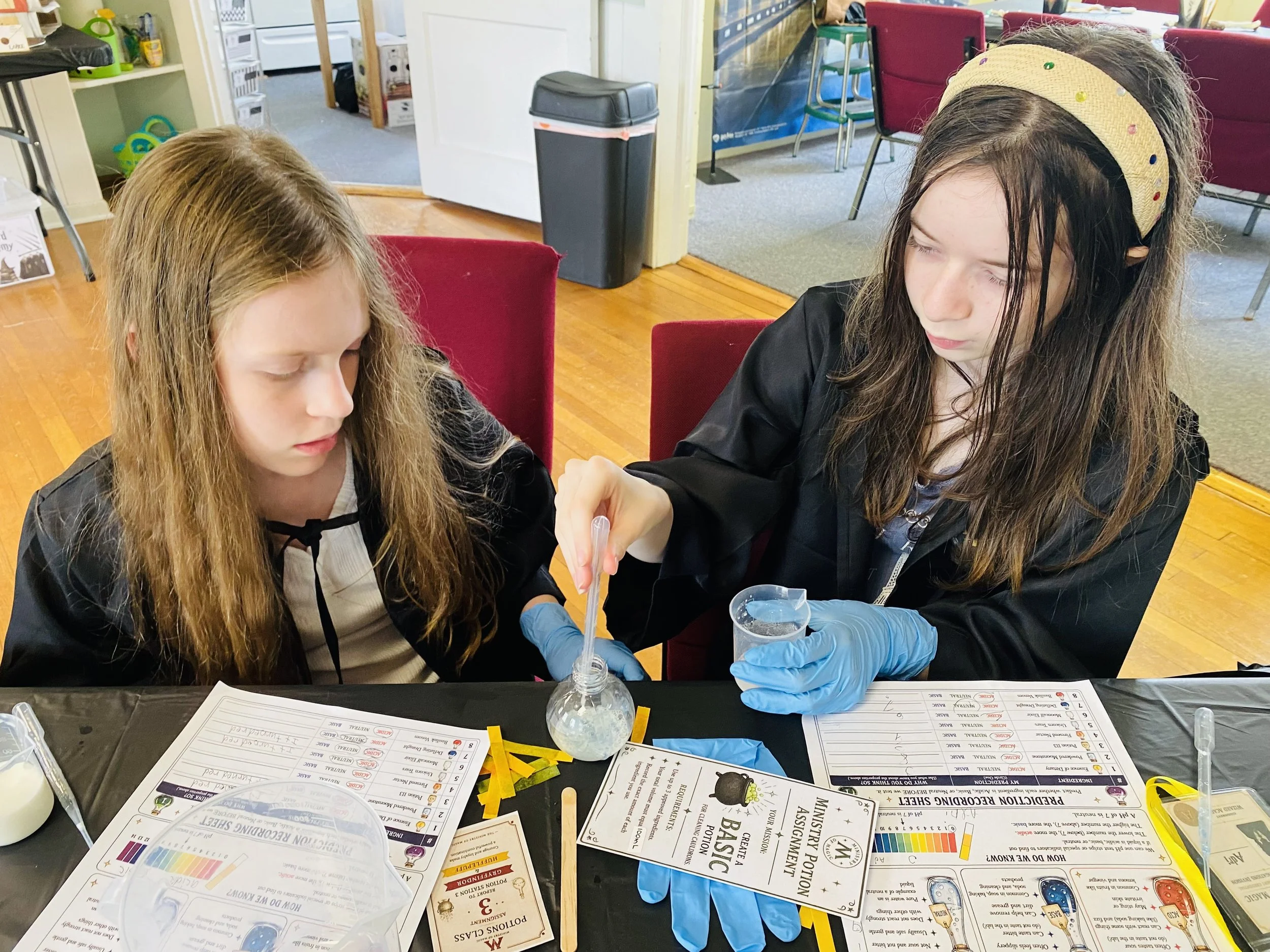
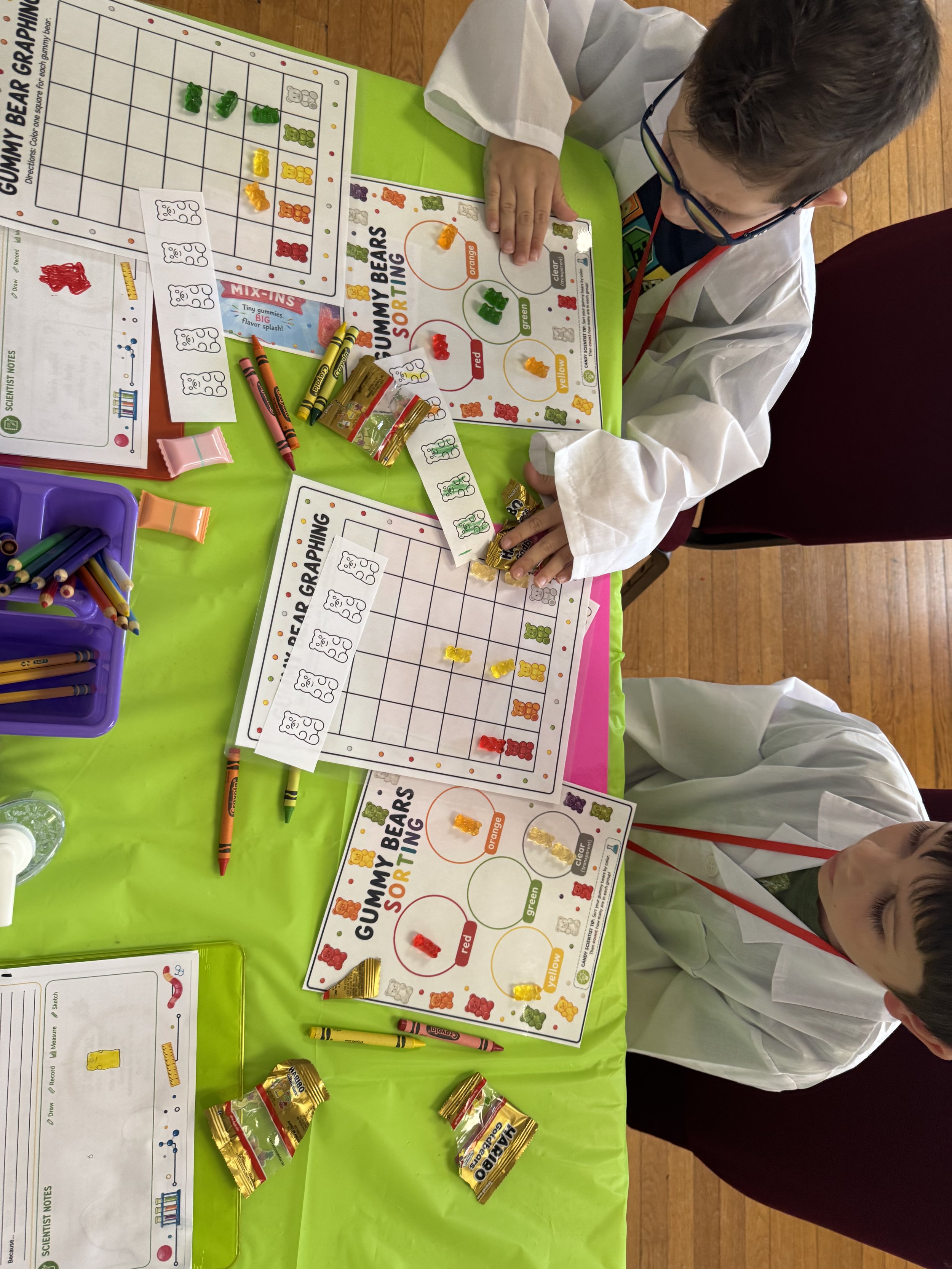
What is a Learning Lab?
A Learning Lab is a dynamic, high-engagement environment where curiosity builds the bridge to academic mastery.
Our Learning Labs focus on micro-group instruction and multi-sensory learning. By using themed topics to fuel exploration, we ensure students stay fully engaged as they work toward mastery in math and literacy through a purposeful, rigorous curriculum.
The Pedagogy: Why It Works
Step 1: The Personalized Pathway (Pre-Evaluation)
Before a Lab even begins, we establish a baseline through specialized assessments and direct parent input.
Step 2: The Studio Lab Experience
Small Group Dynamics
Research consistently shows that instruction is most effective when delivered in small groups. Our In Person Learning Labs have a max of 12 students. Small groups allow the educator to provide immediate feedback and scaffold instruction to the exact level where a child is challenged but not overwhelmed (working in the Zone of Proximal Development - ZPD). ZPD shows what a child can do with support while building confidence on that task and working towards independence.
The Power of Center Rotations
Our Labs utilize a rotation model that targets different modalities:
The Teacher Table: Direct, explicit instruction in a small group setting.
The Collaborative Lab: Peer-to-peer problem solving and social-emotional growth.
The Sensory/Tactile Station: Reinforcing abstract concepts through hands-on manipulation.
The Mastery Studio: Metacognition (thinking about how they learn) and personal application of skills.
Thematic Integration and Cognitive Load
Why themes? Because the brain learns best through context and association. By weaving math and literacy into a compelling theme we reduce cognitive load. Students aren’t struggling to find the motivation to learn; they are using the skills as tools to unlock the theme.
“Play is the highest form of research.”
- Albert Einstein